

TL;DR: If your portfolio is already large, you cannot behave like a beginner every time the market falls. New money can enjoy corrections. Old money needs a seat belt. The idea is simple: keep growing, but stop letting every red day hijack your mood.
This Article Is Not for First-Time Investors
This is for the person who already has a meaningful portfolio. Maybe it came from years of saving, investing, business income, bonuses, inheritance, or a mix of everything. The point is simple: this is not pocket money anymore.
When the portfolio was small, a market fall felt like a bad day. Annoying, but manageable. When the portfolio becomes large, the same fall suddenly looks like a luxury car disappearing from your screen. That is when investing stops being only about returns and starts becoming about behaviour.
If you have a sizeable mutual fund portfolio, direct equity portfolio, PMS exposure, or a concentrated family corpus, this is where the conversation changes. The question is no longer only “How do I make more?” It becomes “How do I protect what I have built without killing future growth?”
New Money and Old Money Are Not the Same
Most investors make one basic mistake: they treat all money the same. It is not.
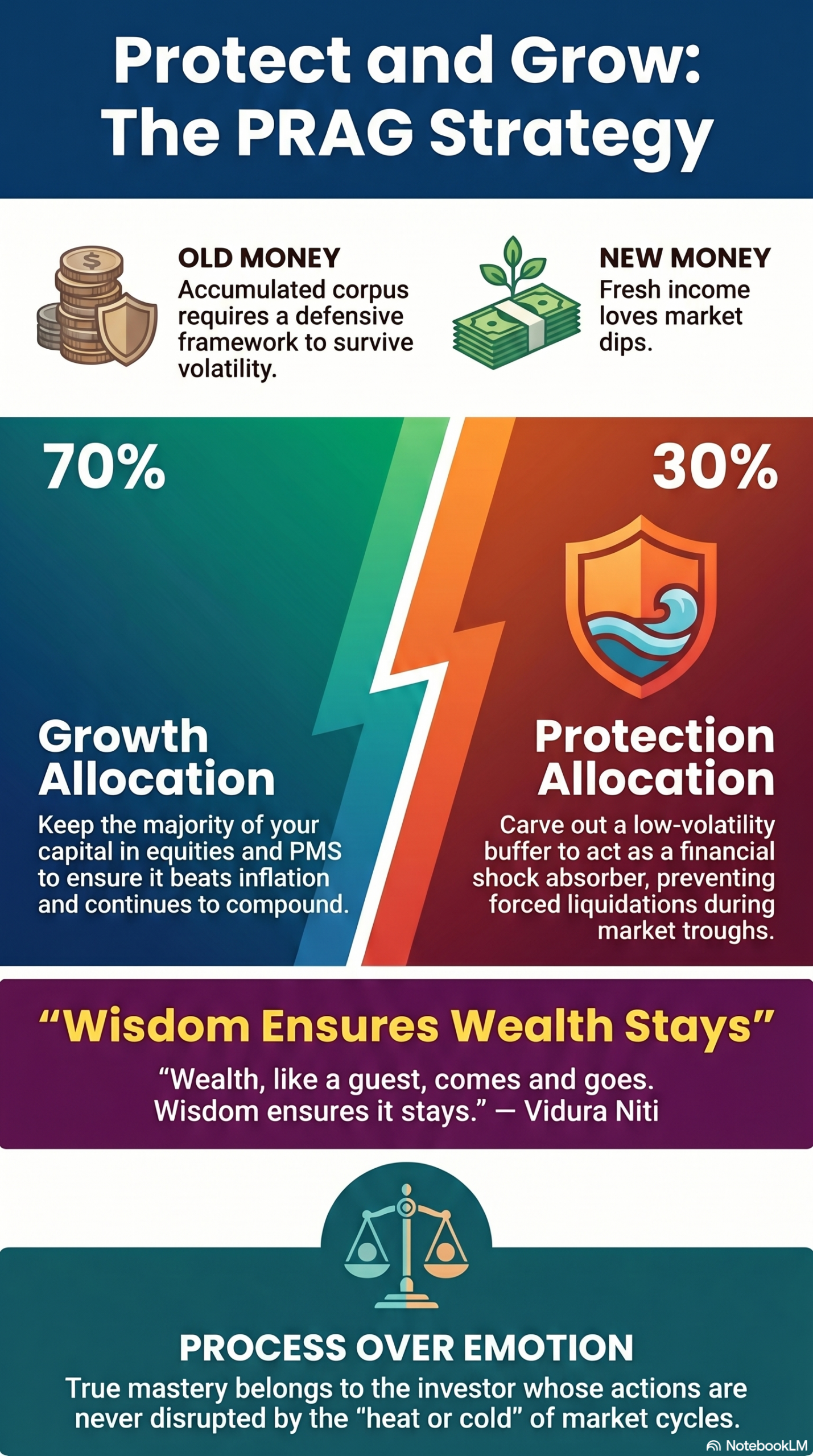
New money is the fresh money you are still investing from your income, SIPs, STPs, bonuses, or business surplus. This money can actually benefit from market corrections because it gets to buy more units at lower prices.
Old money is the money already built. This is your accumulated portfolio, your compounded wealth, your financial base. This money should still grow, but it also deserves protection. You do not want years of compounding to be disturbed just because the market had a bad quarter and the news channels discovered dramatic background music.
The PRAG Idea: Protect and Grow
The PRAG framework simply means Protect and Grow. It is not complicated. It says your big portfolio should have two jobs:
- Grow: Keep a strong part of the portfolio in growth assets so wealth continues to compound.
- Protect: Keep a sensible part in lower-volatility assets so you are not forced to sell growth assets during panic.
A simple way to think about this is a 70:30 structure. Around 70% remains focused on long-term growth through suitable equity, mutual fund, or professionally managed portfolio exposure. Around 30% acts as the calmer bucket. It may not look exciting at parties, but it is often the bucket that helps you sleep.
Why the 30% Protection Bucket Matters
Some investors look at defensive allocation and say, “But this will reduce my returns.” Maybe in a roaring bull market, yes. But that is not the full story.
The protection bucket is not there to win a beauty contest. It is there to stop you from making ugly decisions. When markets fall, it gives you breathing room. You do not have to sell good investments at bad prices just because you need liquidity or emotional comfort.
In simple words: the 30% protection bucket gives the 70% growth bucket time to recover.
Big Portfolios Need Rules, Not Mood Swings
Once your portfolio becomes large, emotions become expensive. Panic selling, overconfidence, chasing the latest theme, or reacting to every headline can do more damage than the market fall itself.
This is where rules help. Decide in advance:
- How much of the portfolio should stay in growth assets?
- How much should stay stable and liquid?
- When will you rebalance?
- What will you do if the market falls 10%, 20%, or more?
If the plan is clear before the fall, the fall becomes easier to handle. You may still feel uncomfortable. That is normal. But discomfort is not the same as confusion.
The Real Question
If you are already sitting on serious wealth, the question is no longer, “Which fund will give the highest return next year?”
The better question is: Can my portfolio survive market noise without forcing me into bad decisions?
That is the difference between investing like a beginner and managing wealth like someone who has something meaningful to protect.
For HNI Investors: When Should You Talk to Primeidea?
If this article made you pause for even ten seconds, that pause is useful. It usually means your portfolio has crossed the stage where generic advice is enough.
If you are sitting on a significant mutual fund portfolio, direct equity holdings, PMS allocation, ESOP wealth, business surplus, inheritance, or family corpus, get a second look before the next market fall forces the conversation.
At Primeidea, we help investors review whether their old money has the right balance of growth, protection, liquidity, and discipline. The aim is not to sell excitement. The aim is to build a portfolio that lets you stay calm when markets become noisy.
If your portfolio is now large enough to make market falls personal, speak to Partha at Primeidea for a portfolio review. A calm review today is usually better than an emotional decision during the next correction.
Final Thought
New money can be adventurous. Old money should be mature.
Your fresh investments can keep taking advantage of market falls. But your accumulated wealth needs a structure that protects confidence, liquidity, and long-term compounding.
The goal is not to avoid every fall. That is impossible. The goal is to build a portfolio that can fall without making you fall apart with it.